Programs & Services
Strengthening Transfer Systems
Helping the perinatal workforce improve communication, coordination, and continuity of care.
Who It’s For
Midwives, Physicians, Nurses, Doulas, Birth Centers, Hospitals, EMS
What we offer
- Regional transfer committees
- Simulation training
- Transfer protocols
- Networks of Care tools
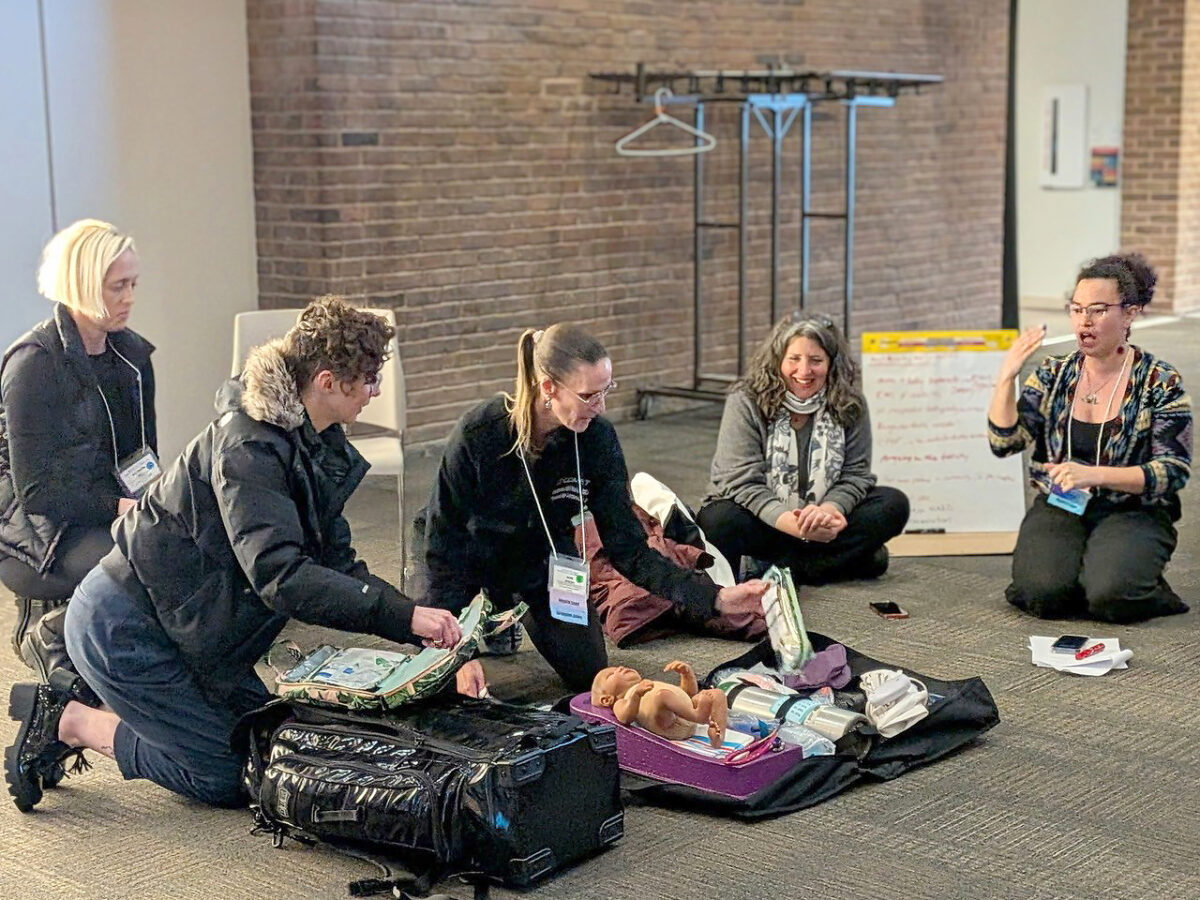
Two-way Integration is central to the ultimate goal of community birth integration and universal access to doula services: equitable, client and family centered options for reproductive and neonatal care that responds to the unique cultural, emotional, social, and physical needs of each person. This can only be achieved if both the mainstream and historically marginalized models of care and provider types adapt.
For most people, the perinatal period lasts 2-3 years from pre-conception planning through the extended post-pregnancy recovery. Throughout this time, individuals support needs, clinical risk factors, care preferences, and emotional & social concerns evolve. Individuals and families will have many ebbs and flows in where, with whom, and when they need services. Transfers between types of providers, between different points of care, and at different times in the perinatal period can be emotionally charged, high-impact events. This is especially true if the reason for the transfer is urgent or carries a high level of safety risk.
Most care in both out-of-hospital and in-hospital environments unfolds without incident and with a deep commitment to person-centeredness. However, in and out-of hospital providers and systems may rarely interact EXCEPT during moments of transfer in care, resulting in high levels of misunderstanding and siloing.
Key Findings
CBDI is convening multi-disciplinary stakeholders from across Massachusetts to change these dynamics and build effective networks of care.
-
16%
of planned out-of-hospital birthing clients will ultimately transfer into a hospital setting during intrapartum or early postpartum period
-
1.8%
of planned out-of-hospital deliveries result in neonatal transfer
-
2%–5%
of all intra- and early postpartum transfers involve acuity warranting a full lights-and-sirens EMS response.
Explore Other Programs
04
Technical Assistance & Systems Improvement
Learn More: Technical Assistance & Systems Improvement